

SEND THE SYSTEM CONTEXT BEFORE PRODUCTION TESTS IT FOR YOU
Send the system context before a concern becomes an operational commitment.
Some system concerns are difficult to act on because they are not yet visible failures.
The system may still run.
The workflow may still move.
The team may still know how to work around the issue.
But something is no longer clean enough to ignore.
A technical lead may need to know whether the concern has engineering basis.
An operations team may need to know whether manual compensation is becoming normal.
Leadership may need to decide whether to continue, restrict exposure or validate further before more dependency is added.
This is the point where doing nothing may be risky — and launching a full review too early may also be unnecessary.
Send the system context so XKALIUS can identify the right technical starting point:
a Snapshot, a focused review, limited clarification, or no action yet.
WHEN TO SEND SYSTEM CONTEXT
Send system context when the operating picture is not clean enough to support the next decision.
This may apply when:
- operators are checking around the system before acting;
- recommendations, signals or dashboards need manual confirmation;
- system state is unclear when a decision depends on it;
- fallback or recovery depends too much on experienced people;
- degraded situations are handled differently depending on who is present;
- rollout, handover, integration or wider use is approaching;
- leadership needs a clearer technical basis before increasing exposure.
The concern does not need to be perfectly defined.
It can start with a simple statement:
“The system works, but the team does not fully trust it.”
“Recovery depends too much on one experienced person.”
“We are about to roll this out, but operations are not fully confident.”
“The system passed acceptance, but real operation still feels fragile.”
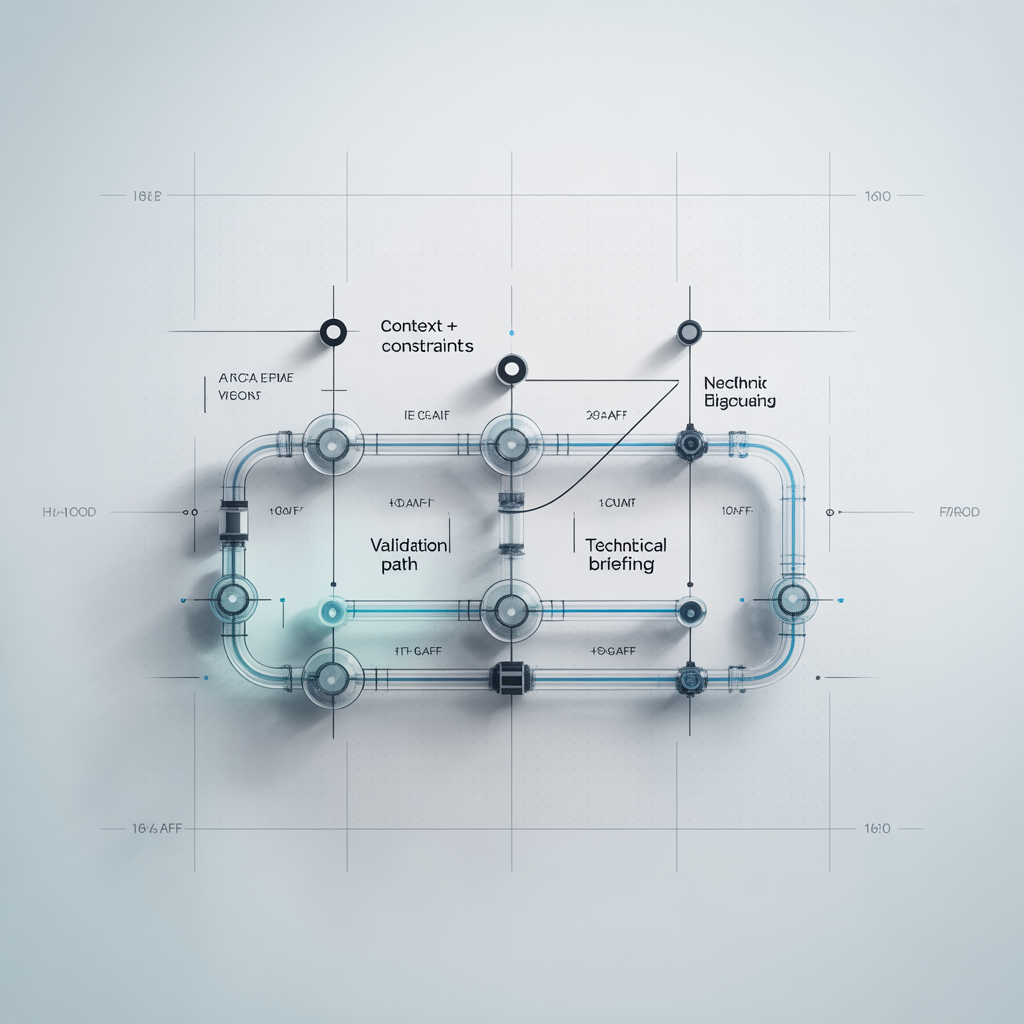
What XKALIUS looks for
XKALIUS first looks for the operational shape of the concern.
The issue may point toward:
Risk signal
A concern appears real, but the weak point is not yet clear.
Trust boundary
The issue sits between system information, decision and action.
Fallback and recovery
Normal operation works, but degraded operation depends too much on people.
Readiness
The system is about to carry more operational weight.
The first reading is reviewed from an engineering perspective, not as a generic sales enquiry.
What happens next
After reviewing the context, XKALIUS will respond within 2 business days with a recommended path or a request for limited clarification.
The recommended path may be:
Operational Risk Snapshot
When the concern is real but still not clearly located.
Trust Boundary Review
When system information may not fully support operational action.
Fallback & Recovery Review
When degradation, escalation or recovery is the concern.
Operational Readiness Review
When rollout, handover, integration or wider dependency is approaching.
The recommendation may also be:
Wait, narrow or stop
When the concern is not strong enough, not suitable for XKALIUS, or better handled another way.
No formal review starts until the next step is clear.


Confidentiality and intake structure
Only send information you are authorised to share.
At the first stage, XKALIUS can work from limited context.
Sensitive technical material, customer data, system exports, logs or internal documents do not need to be shared before the review path is clear.
If deeper technical material is required, XKALIUS can structure the intake through an appropriate confidentiality agreement or NDA.
The first step is not a data room.
It is a focused description of the system concern, the operational dependency and the decision in front of you.
Send the system context
Describe the system and the decision you are facing.
Are you deciding whether to continue, restrict exposure or validate further?
Are you preparing for rollout, handover or wider use?
Are you trying to understand whether operators can rely on the system?
Include what the system does, what feels unclear, what depends on it and what may change next.

Engineering decision systems to remain reliable under real operating pressure
NAVIGATION
Snapshot
Services
The Xkalius Method
Case Studies
Send System Context
Services
Operational Risk Snapshot
Trust Boundary Review
Fallback & Recovery Review
Operational Readiness Review
© 2026 XKALIUS. All rights reserved.
- @ 2026 XKALIUS
- Engineering work for systems where failure is not theoretical